Gross-to-Net Pay
What gross-to-net pay means in payroll, how the calculation works, and why it connects most paycheck terms together.
Gross-to-Net Pay
Gross-to-net pay is the payroll calculation path that starts with gross pay and ends with the employee’s final net pay.
From a payroll perspective, this is one of the most useful umbrella concepts on the site because it ties together earnings, taxable wages, withholding, deductions, and payment. Most paycheck terms are easier to understand once the reader sees where they sit in the same sequence.
Why Gross-to-Net Pay Matters
Gross-to-net pay matters because it explains:
- how payroll explains a paycheck from start to finish
- how payroll reviewers troubleshoot an unexpected net amount
- why gross pay, taxable wages, and net pay are not interchangeable
- why two employees with similar gross pay can still receive different take-home pay
Employees often focus on the deposited amount. Payroll has to explain every step that created it.
Where It Appears In Payroll Workflow
Gross-to-net pay is the heart of the payroll run. In practice, payroll:
- calculates earnings and gross pay first
- determines taxable wages where needed
- applies withholding and payroll deductions
- arrives at the final net-pay amount
- prepares payment through direct deposit, check, or another approved method
That means the gross-to-net calculation is not one isolated line item. It is the structure of the paycheck itself.
Core Formulas
In simplified form:
When pre-tax deductions affect a tax calculation, payroll may also need an intermediate wage base:
Real payroll can contain multiple taxable-wage figures, but this still shows the logic clearly.
Payroll Flow Diagram
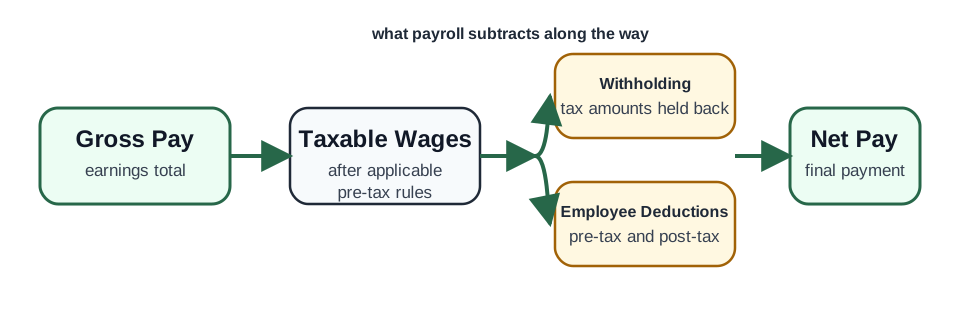
The diagram matters because payroll does not jump directly from gross pay to net pay. Wage bases, withholding, and deduction timing sit in the middle.
Practical Example
An employee has gross pay of $2,400, a pre-tax deduction of $100, tax withholding of $380, and a post-tax deduction of $20.
| Step | Amount | Why payroll cares |
|---|---|---|
| Gross pay | $2,400 | Starting point from earnings |
| Less pre-tax deduction | -$100 | Reduces at least one taxable-wage base |
| Taxable wages for that tax | $2,300 | Amount used for the relevant withholding rule |
| Less withholding | -$380 | Tax amount held back from pay |
| Less post-tax deduction | -$20 | Comes out after the tax calculation |
| Net pay | $2,000 | Final amount delivered to the employee |
That is gross-to-net pay in action: one sequence moving from earned pay to paid pay.